US Senate Reaches Agreement to End Government Shutdown
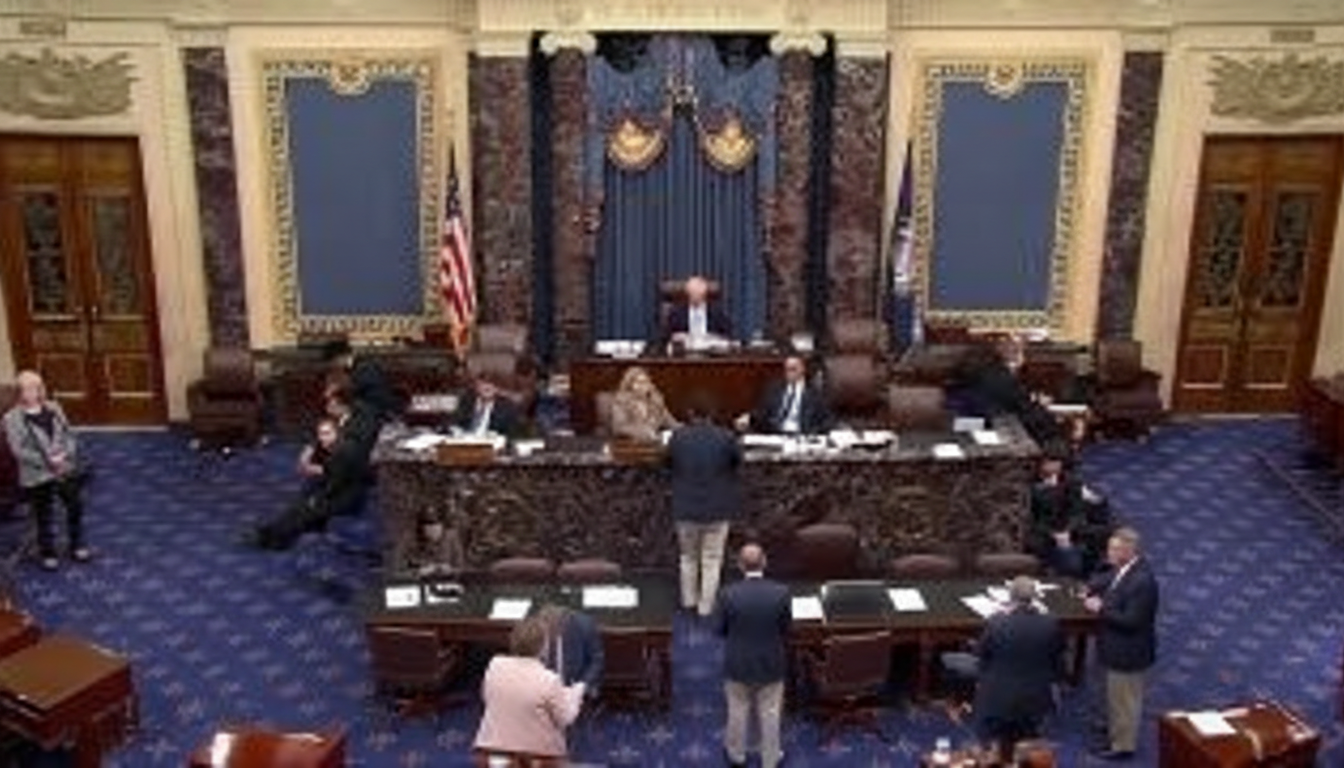
A looming US federal government shutdown has been averted, at least temporarily, thanks to an agreement reached in the Senate, which is expected to restore government functions to normal. The deal provides temporary funding for the government, effectively ending the shutdown and offering a respite for government operations. On the 9th local time, the US Senate reached a consensus on providing temporary government funding, thus averting a shutdown. This agreement is expected to resolve the federal government's funding shortage and provide more time for further discussion. A shutdown occurs when Congress fails to approve a government budget, leading to the closure of government agencies and temporary layoffs of civil servants. Past shutdowns have negatively impacted the national economy and caused public inconvenience.
Government paralysis has often resulted in economic contraction and inconvenience in people's daily lives. With this agreement, the federal government will resume operations immediately, and civil servants will receive their salaries as normal. However, this is a short-term solution, and discussions on long-term budgetary issues will continue. The specific details of the agreement include providing funding to the federal government through a temporary spending bill. This bill will enable the government to meet its immediate financial obligations and provide additional time for negotiations. Through this agreement, Congress has avoided the worst-case scenario of a shutdown and bought time to address the budget issue. Former US President Donald Trump has not yet issued an official statement regarding the Senate agreement. A White House official stated that the President respects Congress's decision and will work to ensure the government operates normally. Trump's statement could be a significant variable in future budget negotiations.
Some are concerned about the impact of this agreement on next year's budget negotiations. In particular, there is speculation that it will be difficult to find a long-term solution due to the differences between the Republican and Democratic parties. The two parties are sharply divided on key issues such as defense spending and social welfare spending, and considerable turmoil is expected in future negotiations. In the past, the US government has experienced several shutdowns. Between 2018 and 2019, there was a 35-day shutdown, the longest in history. During that shutdown, numerous federal employees did not receive salaries, and government services were disrupted. This case demonstrates that shutdowns extend beyond the suspension of government functions and affect the economy as a whole. Shutdowns affect not only the interruption of government functions, but also have ripple effects throughout the economy. Various problems can arise, such as delays in government contracts, contraction of the tourism industry, and postponement of economic data releases. Shutdowns amplify uncertainty among economic actors and act as a factor in dampening investment sentiment. Experts point out that while this agreement has succeeded in averting a short-term crisis, it falls short of resolving the underlying problem. The prevailing opinion is that constructive dialogue and compromise between the two parties are necessary for long-term financial stability. It emphasizes that political concessions and compromises are inevitable to solve the budget problem.
Based on this agreement, the US Congress will accelerate negotiations on next year's budget. The two parties are sharply divided on key issues such as defense spending and social welfare spending, and the negotiation process is expected to be rocky. Congress is expected to speed up negotiations in order to meet the budget deadline. In the future, the US Congress will finalize a schedule for processing budget-related bills and proceed with related discussions. Congress is expected to gather opinions from various stakeholders during the budget process and seek reasonable solutions. The US government's budget-related policy decisions have a wide-ranging impact on the domestic and international economy, so attention is focused on its progress.
