Trump's 'Clean Out Gaza' Remark Sparks International Outcry
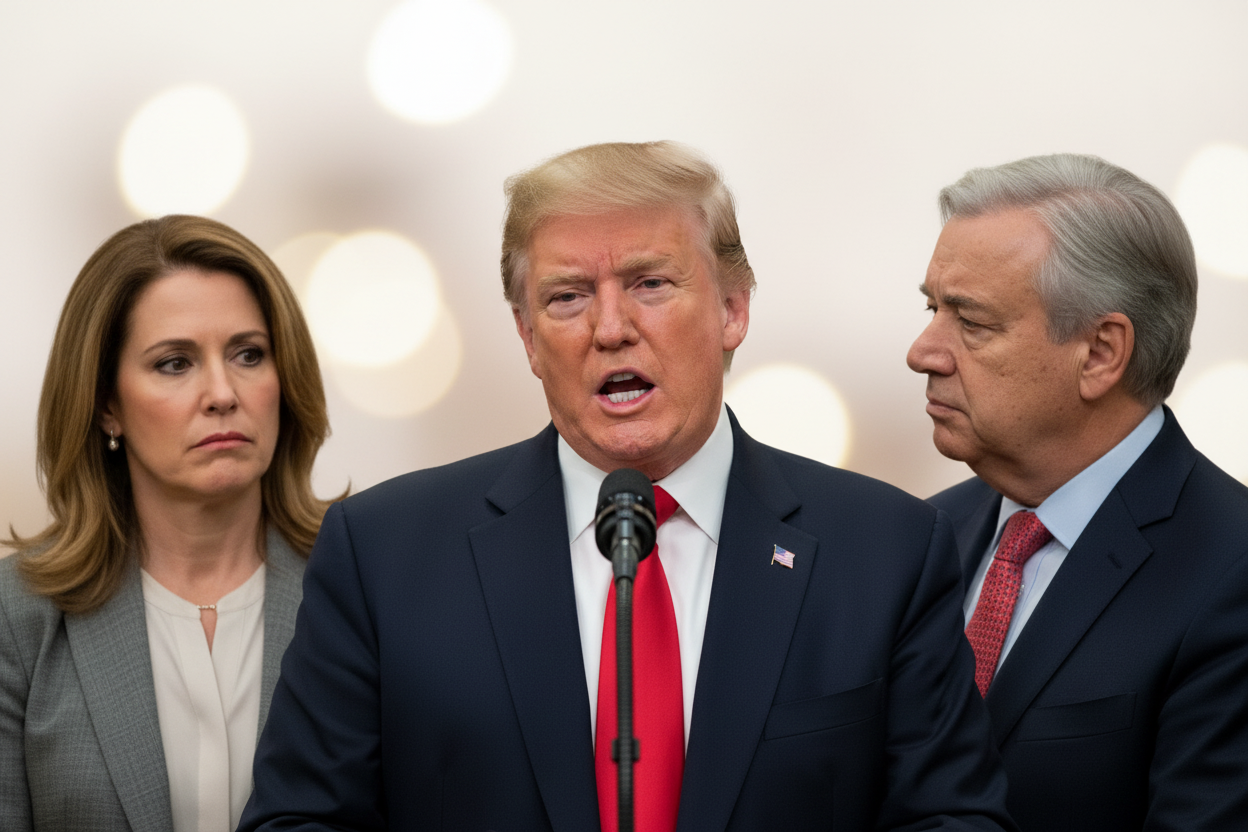
Former U.S. President Donald Trump is facing fierce international criticism for his remark about 'cleaning out' the Palestinian Gaza Strip. Trump's statement, which includes a proposal to transfer Gaza residents to Egypt and Jordan, is fueling controversy. Trump said on the 8th (local time) during a campaign rally, "We have to clean out Gaza." He elaborated on his plan, arguing that Gaza refugees should be relocated to Egypt and Jordan. This statement has immediately drawn strong opposition from the international community and is being met with increased scrutiny in light of Trump's past actions. Some analysts suggest that Trump's remarks are a strategy to rally his base amid recent polls showing a decline in his approval ratings. The idea is to secure support from conservatives through strong rhetoric and, at the same time, strengthen relations with Israel. However, others are concerned that Trump's statement could exacerbate instability in the Middle East and damage the international standing of the United States. Immediately after Trump's remarks, the governments of Egypt and Jordan issued statements refuting the claims and expressing strong displeasure. The Egyptian government emphasized in its statement that "accepting Palestinian refugees could place a severe burden on national security and the economy." The Jordanian government also stated that "it is already hosting a significant number of Palestinian refugees, and it is difficult to accommodate additional refugees." The European Union (EU) and the international community as a whole expressed deep concern about Trump's remarks and called for their immediate retraction. An EU foreign affairs official criticized Trump's statement as "an act that undermines the international community's efforts to resolve the Palestinian issue." He stressed that "all parties must de-escalate tensions and seek peaceful solutions," warning of the negative impact that Trump's remarks could have. United Nations Secretary-General António Guterres stressed that "the resolution of the Palestinian refugee issue must be achieved peacefully in accordance with international law and UN resolutions."
He pointed out that Trump's remarks could undermine these efforts and urged all member states to abide by international law and work towards a peaceful resolution. Secretary-General Guterres added that the UN will continue to work towards resolving the Palestinian issue. Within the United States, criticism of Trump's remarks is also growing. The Democratic Party strongly criticized Trump's statement as "irresponsible and dangerous." In a statement, the Democratic Party emphasized that "the United States must play a constructive role in promoting peace and stability in the Middle East," pointing out that Trump's remarks could weaken the US's diplomatic position. Some experts are concerned that Trump's remarks could negatively affect US foreign policy. In particular, there is analysis that the US's influence in the Middle East could weaken and anti-American sentiment could spread. There are also concerns that Trump's remarks could further deepen the conflict between Palestine and Israel. The Gaza Strip is a region governed by the Palestinian Authority and is facing a severe humanitarian crisis due to a long-standing conflict with Israel. The Gaza Strip has a very high population density in a small area and suffers from a shortage of basic food, water, and medical services. The international community has reached a consensus that humanitarian assistance to the residents of the Gaza Strip should be expanded and peaceful solutions should be sought. There are concerns that Trump's remarks will make the international community's efforts to resolve the Gaza issue even more difficult and could heighten tensions in the Middle East. It is pointed out that Trump's remarks could amplify the anxiety of the Palestinian people and further worsen relations with Israel. Currently, the White House has not issued any further official statement regarding Trump's remarks. A White House spokesperson said, "We are monitoring the situation and will issue relevant comments at an appropriate time." As international criticism intensifies, attention is focused on what position the White House will take.
