Controversy Erupts Over Proposed 5-Year Prison Sentence for Insulting China
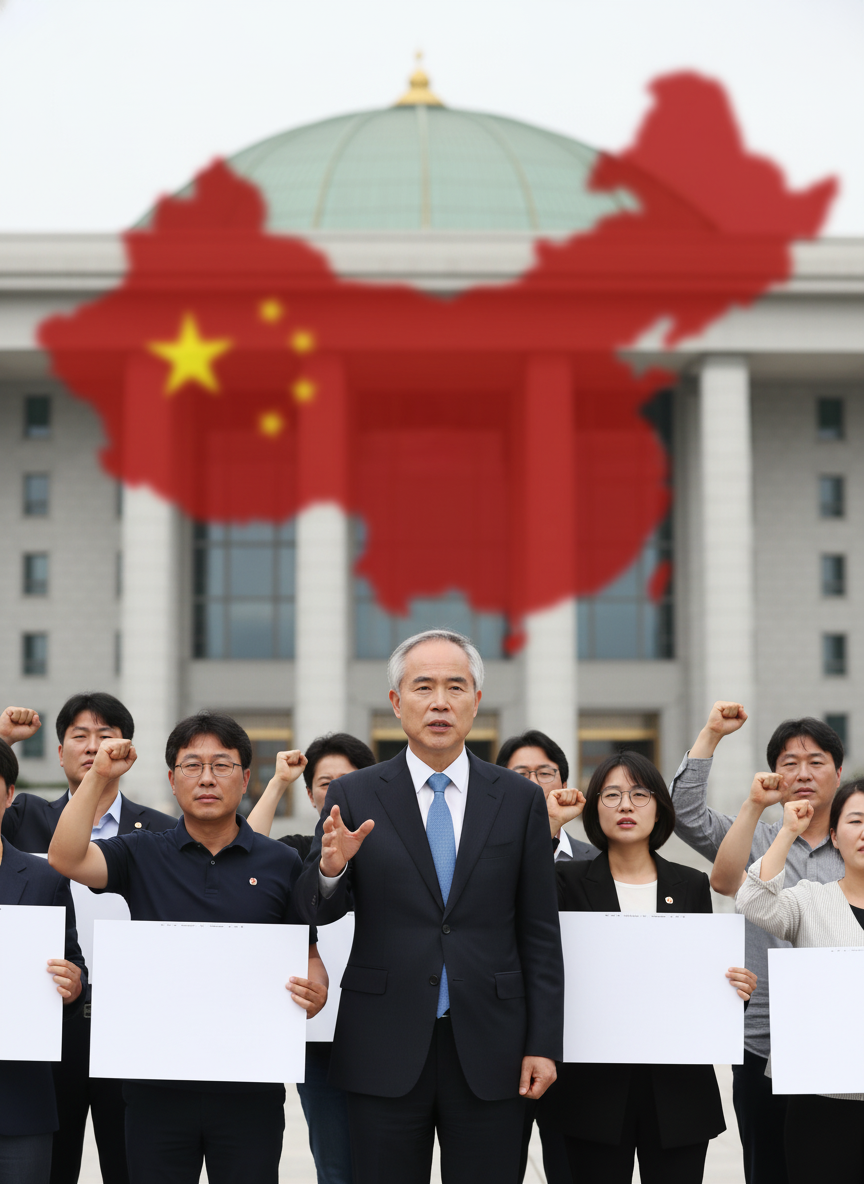
A bill proposed in the South Korean National Assembly to punish acts of insulting China or Chinese people is sparking controversy over potential infringement of freedom of expression. The argument for the strong regulation of hate speech is being countered, foreshadowing a social debate surrounding the bill. The Democratic Party has introduced an amendment to the criminal law that would penalize insults against specific countries and nationalities.
The bill, introduced on November 7, 2025, adds a new clause to the Criminal Act, outlining penalties for defamation and insult against specific groups. As news of the bill's introduction spread, online communities and social media platforms have seen fierce debate on both sides. Some netizens express concern about the infringement of freedom of expression, calling it "excessive regulation," while others support the bill's passage, labeling hate speech as a "social evil."
The proposed amendment, spearheaded by Democratic Party lawmaker Yang Bu-nam, aims to establish Article 307-2 (Defamation of a Specific Group) and Article 311-2 (Insult of a Specific Group) in the Criminal Act. This is interpreted as a commitment to legally regulate hate speech targeting specific countries, nationalities, or races. According to the amendment, Article 307-2 of the Criminal Act would state: "Anyone who publicly disseminates false information that damages the reputation of a specific country, the people of a specific country, or a specific race shall be sentenced to imprisonment for up to five years, suspension of qualifications for up to ten years, or a fine of up to 10 million won." This strengthens the punishment for acts of damaging the reputation of a specific group by spreading false information.
Furthermore, Article 311-2 stipulates: "Anyone who publicly insults a specific country, the people of a specific country, or a specific race shall be sentenced to imprisonment or confinement for up to one year, or a fine of up to 2 million won." This establishes a new crime of insulting a specific group, which did not exist in the existing Criminal Act, with the intention of holding individuals legally responsible for hate speech.
However, critical views on the bill are also significant. Some raise concerns that the bill could excessively infringe on freedom of expression. In particular, it is pointed out that even critical opinions, satire, and humor expressed online could be subject to punishment. Legal experts suggest that the bill may violate the principle of clarity. The standard of 'insult' is ambiguous, allowing for arbitrary interpretations, which could lead to confusion in the law enforcement process.
Concerns are also raised that the bill could stifle the expressive activities of individuals with critical views on specific countries or nationalities. On the other hand, supporters of the bill emphasize that hate speech deepens social conflict and can incite discrimination and violence against specific groups. Hate speech should be regarded not merely as an expression of personal feelings, but as an act that threatens the safety and integration of society as a whole. Some civic groups have expressed the need for legal regulation of hate speech, expressing hope that the amendment will contribute to eradicating hate speech. They argue that legal mechanisms are necessary to protect vulnerable groups who suffer from hate speech and to create a healthy social community.
The argument is also made that hate speech regulation is an unavoidable choice for social integration. Some point out that European countries such as Germany and France are strengthening legal regulations on hate speech and argue that South Korea should also introduce hate speech regulations in line with international trends. They point out that hate speech causes severe mental distress to social minorities and creates anxiety throughout society, emphasizing that hate speech should be eradicated through legal regulation.
It is also argued that freedom of expression is an important value of a democratic society, but hate speech goes beyond the limits of that freedom. Hate speech incites discrimination and violence against specific groups and deepens social conflict, so it cannot be protected by freedom of expression. It is also argued that hate speech regulation is not a restriction on freedom of expression, but an effort to create a society where all members can live equally and with dignity.
It is expected that discussions on hate speech in South Korean society will become more active as a result of the introduction of this bill. Finding a balance between freedom of expression and hate speech regulation is expected to be an important task. The National Assembly will carefully review the bill, gathering opinions from all walks of life. The bill will be finalized after review by the National Assembly's Legislation and Judiciary Committee and a vote in the plenary session. Depending on whether the bill passes, new standards for freedom of expression and hate speech regulation in South Korean society are expected to be established. In the bill review process, in-depth discussions are expected on the definition of hate speech, the level of punishment, and the possibility of infringing on freedom of expression.
