Trump Claims Tariffs Attracted $17 Trillion in Investment
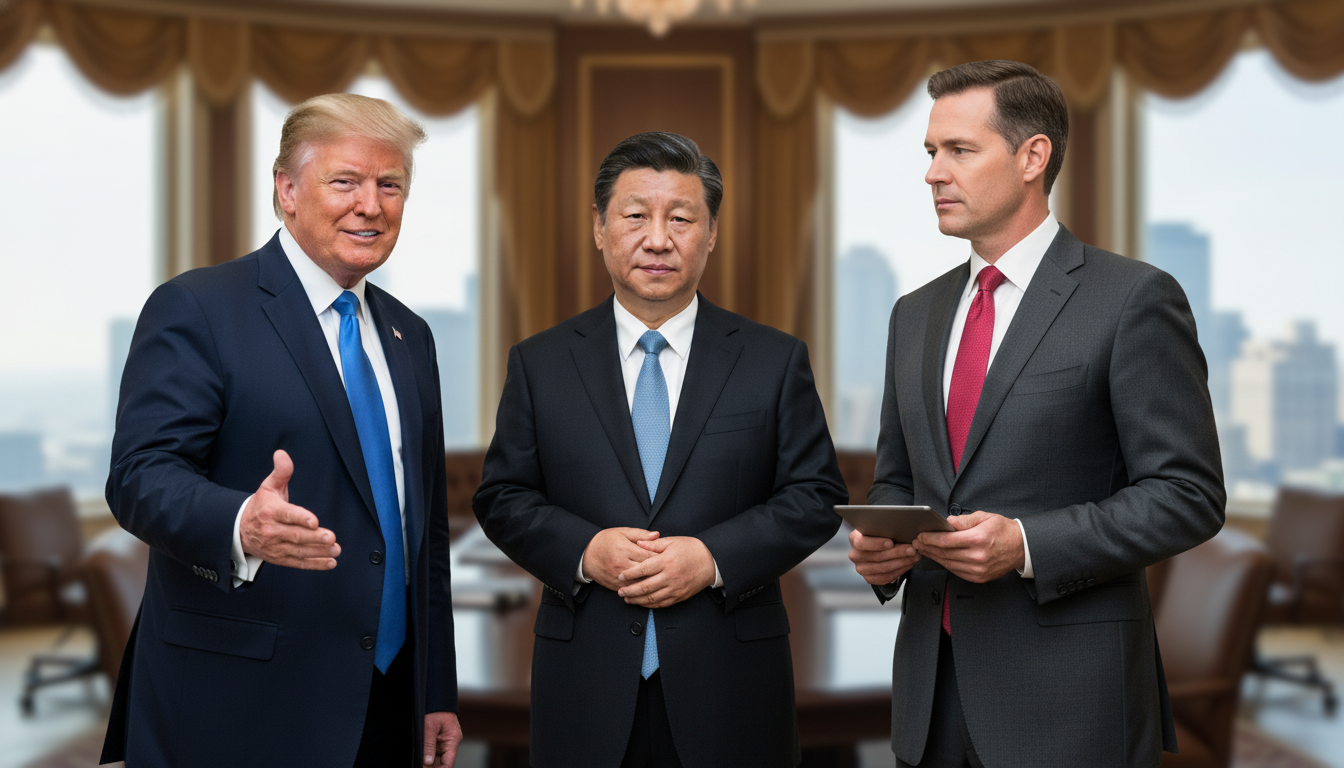
During an interview with CBS's '60 Minutes,' U.S. President Donald Trump claimed that his administration has attracted $17 trillion in investments in the nine months of his term. Trump cited his tariff policy as a major factor behind these investments.
Trump's remarks came during an interview with CBS '60 Minutes' at the Mar-a-Lago resort in Florida last month. He emphasized in the interview that "We've been able to get $17 trillion from all over the world because of tariffs."
Trump touted his economic policies as having a positive impact on the U.S. economy. While he did not specify investment examples or details, he stressed that his tariff policy is revitalizing the U.S. economy.
Trump's tariff policy has been pursued with the goal of reviving the U.S. manufacturing sector and creating jobs. He has focused on encouraging foreign companies to expand their investments in the U.S. and strengthening the competitiveness of American companies by imposing tariffs on imports.
However, Trump's tariff policy has also been criticized for undermining the international trade order and deepening protectionism. In particular, major countries such as China and the European Union (EU) have responded to U.S. tariffs with retaliatory tariffs, intensifying trade tensions.
Some economists warn that while Trump's tariff policy may have a positive impact on the U.S. economy in the short term, it could lead to a global trade contraction and supply chain instability in the long term. It is also pointed out that the rise in import prices due to tariffs will ultimately burden U.S. consumers.
Meanwhile, it has been reported that Trump ordered a nuclear test just before his summit with Chinese President Xi Jinping last month. The specific background and intent of this order have not yet been clarified.
The White House has not issued an official statement regarding the nuclear test order, and there are reportedly differing opinions within the U.S. government. Some analysts suggest that Trump took a hardline stance to gain an advantage in negotiations with China.
The U.S. federal government has been shut down since 12:01 AM (Eastern Time) on the 1st of last month, as the U.S. Congress failed to reach a budget agreement. If the government shutdown is prolonged, various problems such as the suspension of civil servant salaries and the reduction of public services may occur, raising concerns that this could negatively affect the overall economy.
The U.S. Congress is negotiating a budget bill to resolve the government shutdown, but still fails to narrow differences on key issues. In particular, the confrontation between the ruling and opposition parties is intensifying over sensitive issues such as the border wall construction budget and health insurance reform, making it impossible to rule out the possibility of a prolonged government shutdown.
Prolonged government shutdowns are analyzed to weaken the growth of the U.S. economy due to deteriorating economic indicators and reduced investment sentiment. Concerns are also being raised that the paralysis of government functions could disrupt the pursuit of foreign policy.
Trump's tariff policy, nuclear test order, and government shutdown are having a complex impact on the U.S. economy and foreign policy, and attention is focused on what changes these factors will bring to American society in the future.
