Gyeongju Declaration Reaffirms Value of Multilateral Trade Amid US-China Tensions
The Asia-Pacific Economic Cooperation (APEC) summit in Gyeongju, South Korea, concluded on November 2, 2025, with the adoption of the 'Gyeongju Declaration,' reaffirming the value of multilateral trade. This outcome emphasizes the importance of multilateralism amidst ongoing tensions between the US and China. Leaders of participating nations expressed their commitment to countering protectionism through the declaration.
President Lee Jae-myung actively engaged in both multilateral and bilateral diplomacy during the APEC summit. Beginning with a summit with the United States on October 29, 2025, President Lee held successive meetings, including one with Singapore, to discuss avenues for economic cooperation. The meeting with the US focused particularly on stabilizing supply chains and fostering collaboration in advanced technologies.
Japanese Prime Minister Sanae Takaichi held her first summit with President Lee Jae-myung in Gyeongju on October 30, 2025, seeking ways to improve bilateral relations. The meeting reportedly involved discussions on various issues, including historical matters and economic cooperation. The two leaders agreed to work towards enhancing mutual understanding and building a future-oriented relationship.
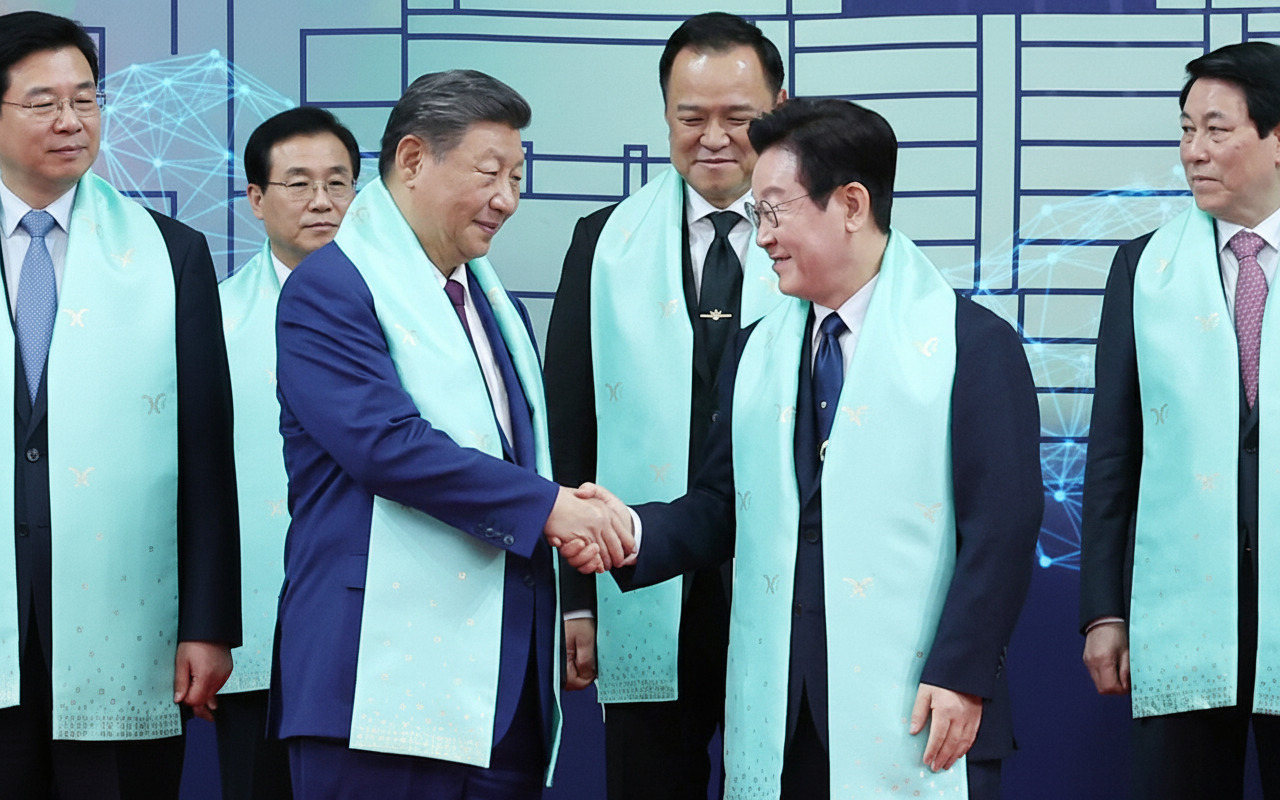
On November 1, 2025, President Lee Jae-myung participated in a commemorative photo session with the APEC leaders at the Gyeongju Hwabaek Convention Center. During this event, President Lee met with Chinese President Xi Jinping and exchanged pleasantries, sharing views on matters of mutual interest. Both leaders acknowledged the importance of cooperation for regional stability and committed to continuing dialogue and communication.
The Gyeongju Declaration reflects APEC member states' support for the multilateral trading system and their commitment to jointly address the spread of protectionism. The declaration reportedly includes provisions for easing trade barriers, strengthening digital economy cooperation, and pursuing joint efforts for sustainable growth. It also emphasized the need for international cooperation to recover from the COVID-19 pandemic.
Throughout the APEC summit, leaders from various countries engaged in bilateral talks to advance their economic interests and discuss regional cooperation strategies. They focused particularly on exploring collaborative responses to new challenges such as the digital economy, climate change, and health security. The leaders agreed to strengthen efforts to create a free and fair trade environment and pursue sustainable growth.
This APEC summit is being assessed as an opportunity to reaffirm the importance of multilateral trade and strengthen regional economic cooperation amidst escalating US-China tensions. The leaders pledged to overcome protectionism and isolationism and work towards building an open and inclusive trading system. They also committed to supporting developing countries struggling due to the COVID-19 pandemic and strengthening international cooperation for economic recovery.
Following the adoption of the Gyeongju Declaration, APEC member states are expected to pursue follow-up measures to materialize the declaration's content. This is expected to include negotiations to reduce trade barriers, policy development to strengthen digital economy cooperation, and promotion of joint projects for sustainable growth. The APEC Secretariat will also play a role in supporting member states' cooperation and monitoring the implementation of the declaration.
Some quarters have raised questions about the effectiveness of the Gyeongju Declaration. However, APEC member states are expected to support the multilateral trading system and work to strengthen regional economic cooperation. Addressing new challenges such as the digital economy and climate change is considered an important goal for APEC.
Some experts have analyzed that this APEC summit and the Gyeongju Declaration can contribute to reaffirming the importance of the multilateral trading system and strengthening regional economic cooperation. Challenges such as US-China conflict and the spread of protectionism still exist.
The leaders attending this meeting agreed to strengthen the role of APEC and work towards regional economic integration. The digital economy, climate change, and health security were identified as key areas of cooperation for APEC. APEC member states plan to address these challenges through mutual cooperation and lay the foundation for regional prosperity.
