Lee Jae-myung: Trade Talks Should Prioritize Substance Over Deadline; No Need to Be Railroaded

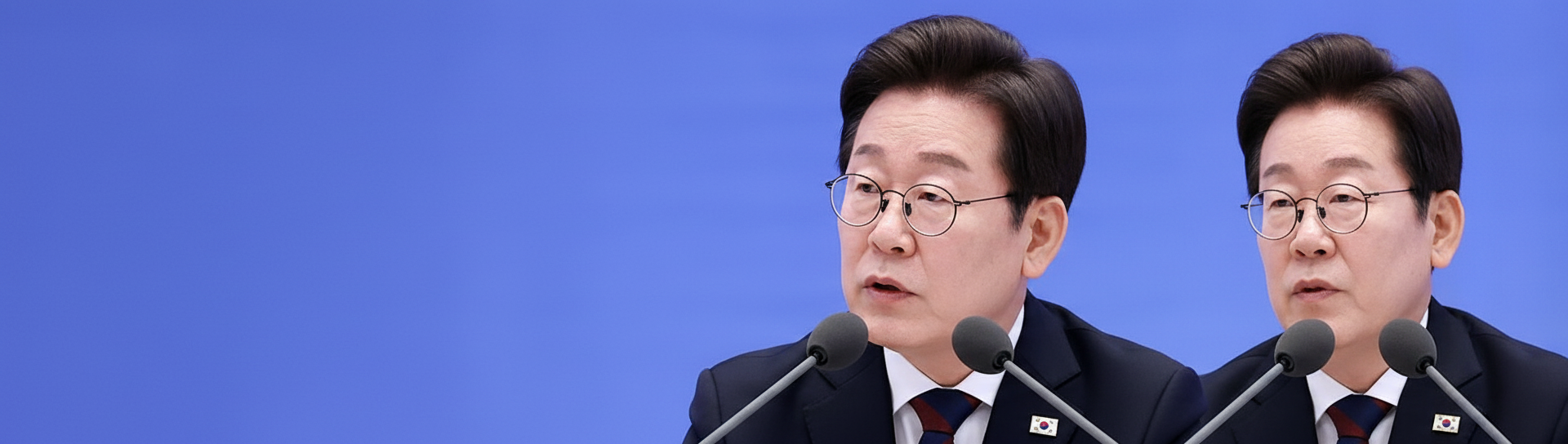
Lee Kang-yoon: Trade Talks Should Prioritize Substance Over Deadline; No Need to Be Railroaded
Lee Kang-yoon, director of the Institute for Political Culture Research, appeared on 〈Jeon Su-mi's News Insider〉 on October 27, 2025, to share his views on the ongoing trade negotiations. Director Lee emphasized the importance of pursuing substantial benefits rather than being bound by the negotiation deadline, asserting that "trade negotiations should prioritize substantial benefits over the (APEC) deadline." Regarding the government's current 'Diplomacy Super Week,' he analyzed that the core issues of the negotiations are unlikely to involve significant changes to the total framework, with the cash contribution amount and installment payment schedule being the main points of contention. Director Lee's remarks can be interpreted as expressing a critical perspective on the current trade negotiation strategy being pursued by the government.
Director Lee Kang-yoon emphasized the need to prioritize national interests without succumbing to pressure from the United States. He offered the analysis that "Trump's statement that 'agreement will be reached when Korea is ready' is a negotiation tactic," arguing that while there may be pressure from the US during the negotiation process, it is crucial to pursue substantial benefits without being swayed. This statement suggests that the Korean government should maintain an independent stance in light of the recent intensification of tensions with the United States, particularly in the economic sphere. Director Lee's remarks are noteworthy as they suggest a direction for the Korean government's position in the upcoming trade negotiation process.
Parties Sharply Divided Over Real Estate Policies
Meanwhile, the political arena is witnessing escalating debates between the ruling and opposition parties over real estate policies. Kim Do-eup, chairman of the People Power Party's Policy Committee, strongly criticized President Lee Jae-myung's administration's real estate measures as those of an "amateur, incompetent regime," asserting the failure of the current government's real estate policies. In response, Kim Byung-joo, a member of the Democratic Party's Supreme Council, retorted to the People Power Party's Real Estate Special Committee, stating, "I hope you will close your hypocritical mouths," criticizing the People Power Party's real estate policies instead. Furthermore, Lee Eon-ju, a member of the Democratic Party's Supreme Council, proposed a complete review of real estate interest rate policies, urging the government's active intervention in the current real estate market situation. As such, the ruling and opposition parties are sharply divided over real estate policies, which is expected to have a significant impact on the future management of state affairs. In particular, real estate policies are likely to emerge as a major issue in the lead-up to next year's general election.
The debate over President Lee Jae-myung's administration's real estate policies extends beyond the effectiveness of the policies themselves to an evaluation of the government's economic management capabilities. The opposition party is highlighting the failure of the government's real estate policies and raising the banner of a judgment against the current administration, while the ruling party is refuting the opposition's claims and emphasizing the inevitability of the policies. In this context, Lee Eon-ju's proposal to review real estate interest rate policies can be interpreted as suggesting a possible change in government policy. However, it remains unclear in which direction the government will revise its policies, and it is expected that reaching a consensus between the ruling and opposition parties will not be easy. The conflict between the ruling and opposition parties over real estate policies is expected to continue for the time being and is likely to become a major issue in the political arena.
Political Arena Clashes Daily Over Key Issues
The political arena is clashing daily over various issues besides trade negotiations and real estate policies. In particular, the differences in positions between the ruling and opposition parties are clearly evident in various fields such as diplomacy, security, and the economy, which is adding to the difficulty of operating the National Assembly. The ruling party is focusing on emphasizing the legitimacy of government policies and defending against the opposition's criticism, while the opposition party is taking an offensive stance, pointing out the problems with government policies. This confrontational structure is expected to continue for the time being, raising concerns that it could exacerbate instability in the political arena. It is also pointed out that the more severe the political conflict becomes, the greater the public's distrust of politics, which could have a negative impact on the development of democracy.
In order to resolve the political conflict, the ruling and opposition parties must understand each other's positions and find common ground through constructive dialogue. However, in the current political situation, it is expected that finding a compromise between the ruling and opposition parties will not be easy. In particular, with the general election coming up next year, the ruling and opposition parties are likely to be even more sharply divided, which could further intensify the political conflict. If the political conflict continues, it is important not to overlook the fact that this could disrupt state affairs and negatively affect the lives of the people. The ruling and opposition parties must respect each other, listen to the voices of the people, and achieve political reform. They must strive to improve the efficiency of state affairs and improve the lives of the people through constructive dialogue and compromise.
